
What is a Gansey?
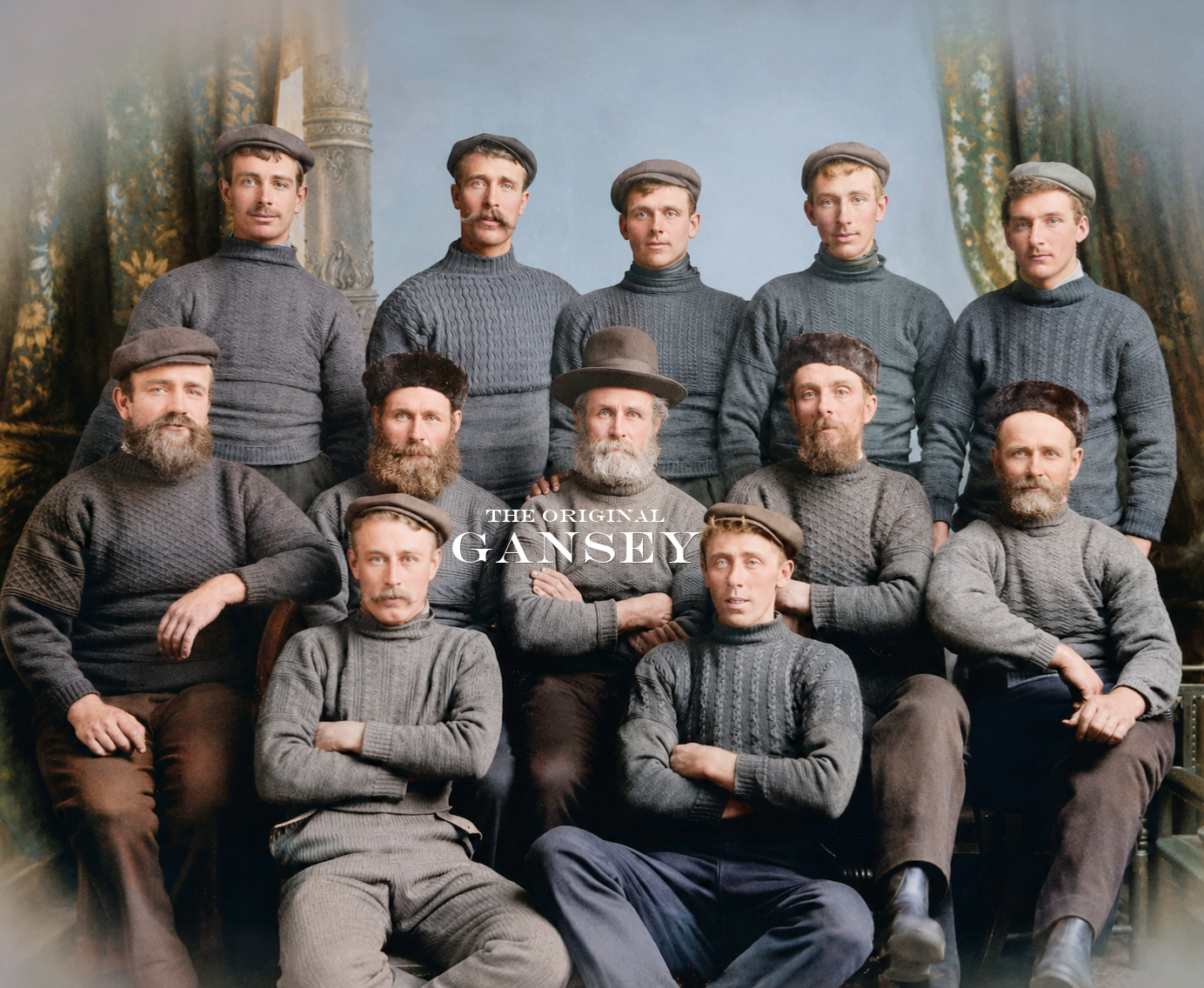
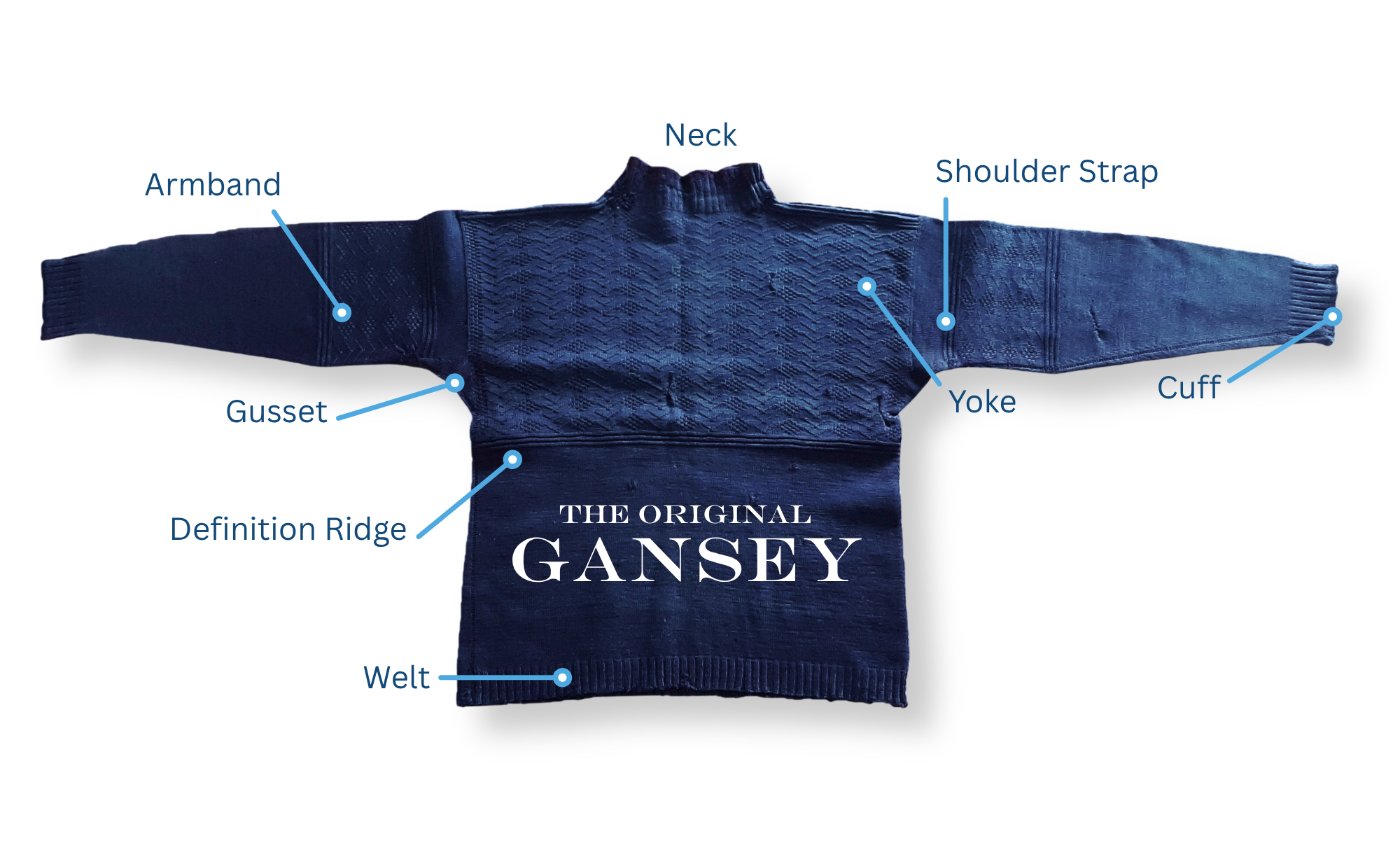
The iconic British fishermen’s sweater is known as gansey, Guernsey, jersey, or knit frock, all somewhat interchangeable. The traditional gansey has a boxy silhouette, is close fitting , has underarm gussets, shortened sleeve length, short waisted, and no seams.
The most decorative part is the textural knit and purl stitch combinations that make up the pattern motifs found on the yoke and upper sleeve areas. At the peak of the British herring fishing industry (1850-1930), the gansey was like a uniform for the fishermen. It was very practical, and known for its warmth, designed for ease of movement, and styled to insure safety around the fishing gear.
Preserving Tradition
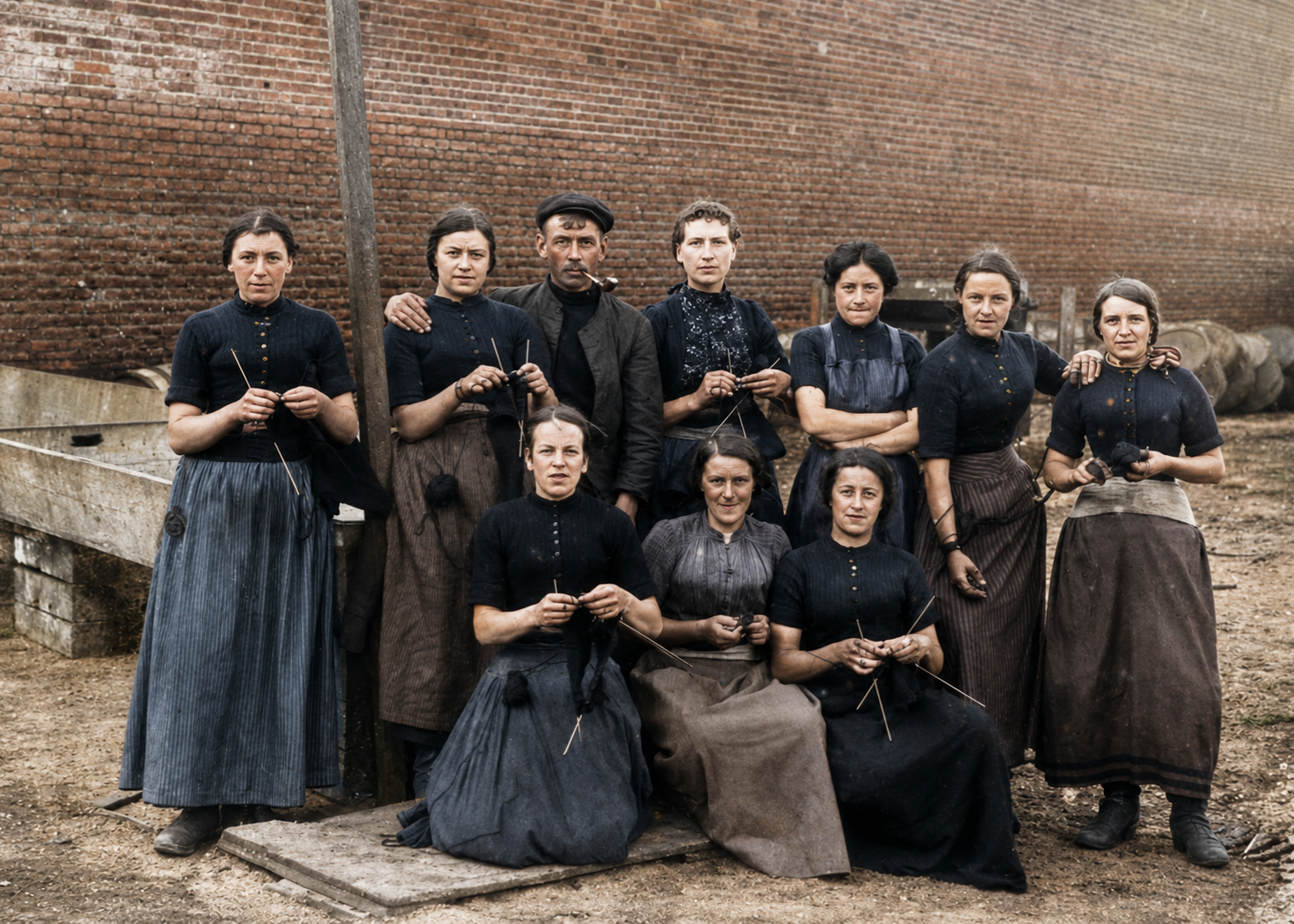
A fisherman’s family faced hard economic times in this era, so women and girls knitted to supplement the family income, as well as to clothe the family.
Women knit constantly- while walking, doing errands, doing chores, attending the children, even into the late night without electricity. The needles were double pointed to allow for knitting in the round. If the needles, known as “wires” were scarce, bicycle spokes or umbrella ribs could be substituted.
There were no written patterns at this time, so knitting designs were by memory and handed down within families and communities. This contributed to familial identity and pride and a sense of belonging in one’s village homeland. Often the wearer’s initials were knitted above the welt. The various stitch patterns were chosen to symbolize familiar objects in everyday life, superstitions, and beliefs. Popular motifs included ropes, nets, anchors, herringbones, shells, quay steps, lighthouses, wavy shapes of the sea, and zigzags known as marriage lines, denoting the ups and downs of married life.
Following the fish
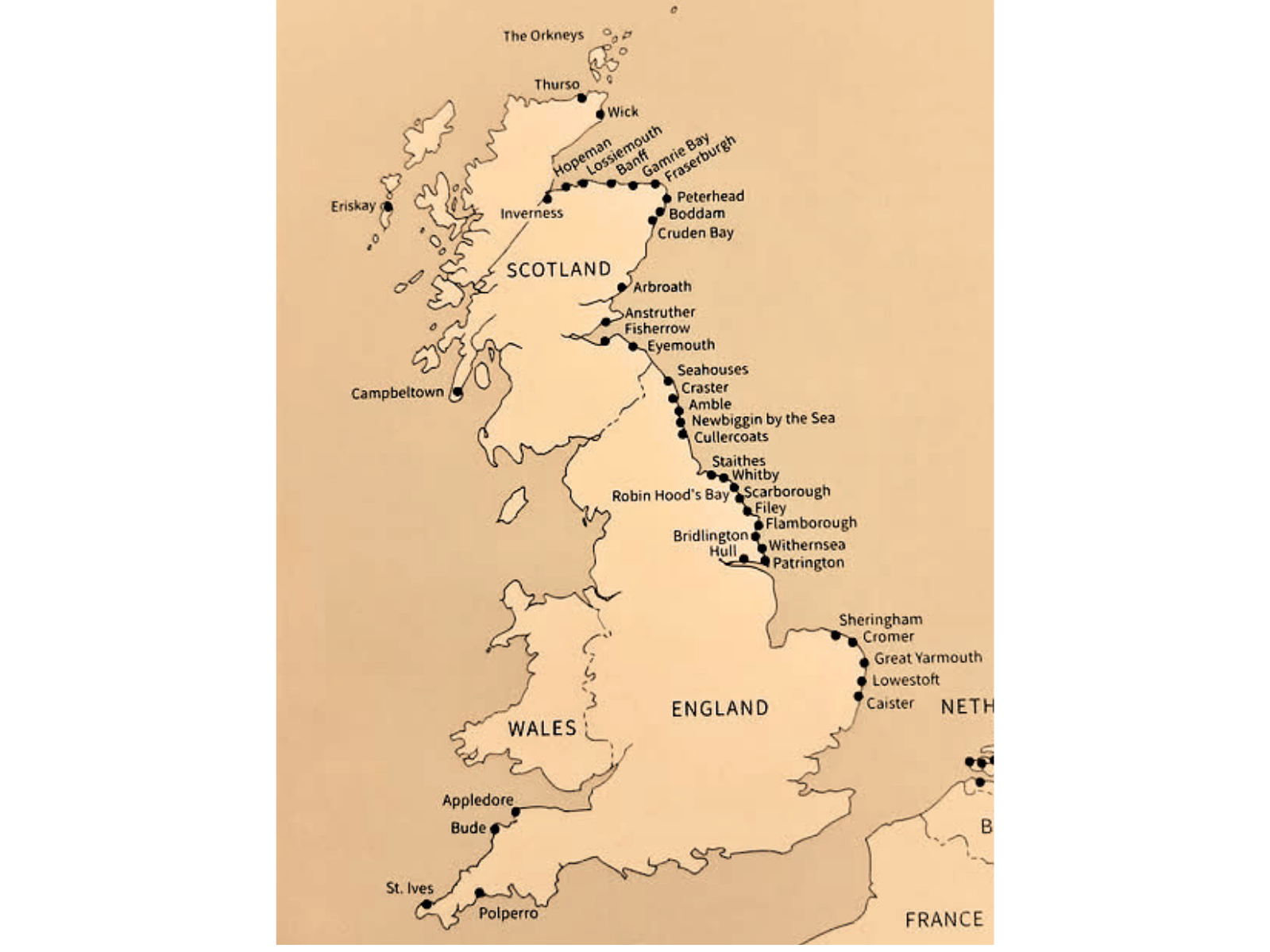
With the herring fishery boom in the late 1800’s-early 1900’s, the fishing fleets travelled around the coasts seeking the migrating fish. The journey would be for months, often starting in Shetland, Scotland and ending along the east coast of England.
The Scottish lassies were responsible for gutting the herring. Thousands of gutters travelled down the coastlines, and they were avid knitters on their time off. It was quite a spectacle for the local people to see this industrious army of knitters thus expanding the gansey popularity and the respective knitting patterns.